Renko charts are a powerful alternative to traditional candlestick and bar charts. Instead of plotting price changes over time, Renko charts focus solely on price movement. This video covers: Whether […]
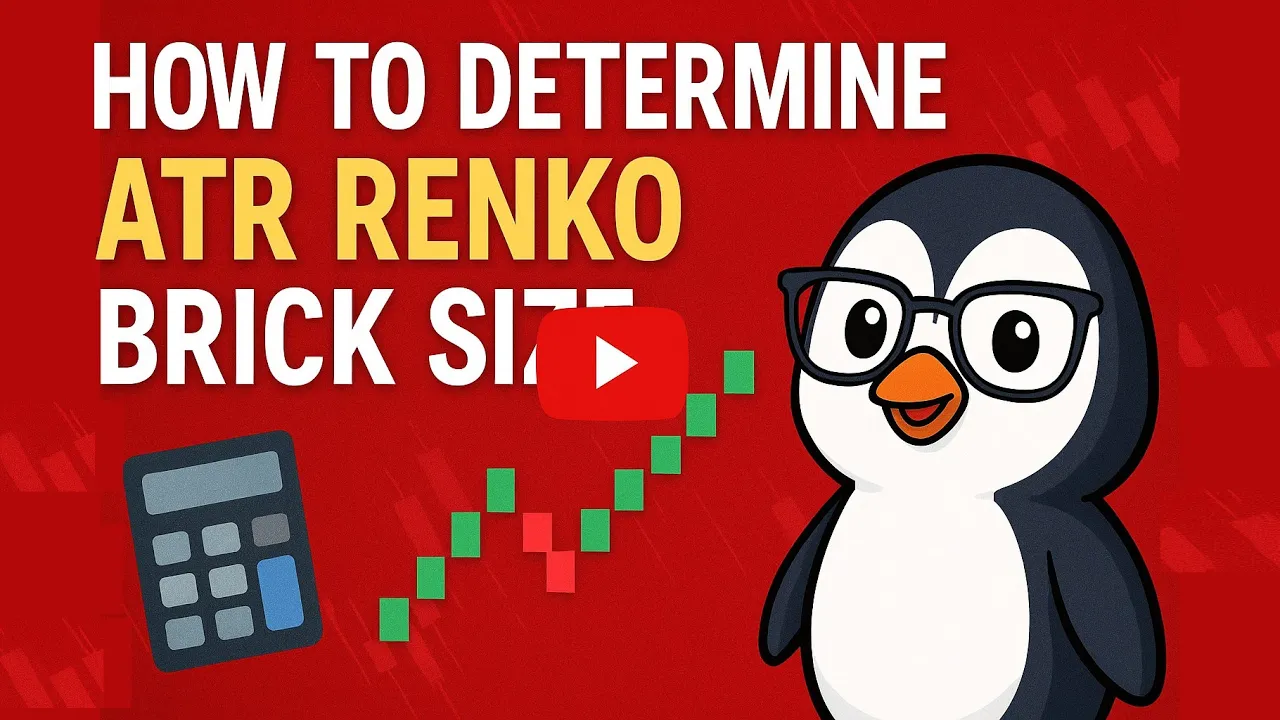
Video: Mastering Renko Charts: ATR Method for Optimal Brick Size
Understanding the optimal brick size is crucial for effective Renko chart analysis. In this video tutorial, we delve into the ATR (Average True Range) method to dynamically set Renko brick […]
Renko Chart Strategy for Beginners 🧱 Simple Rules That Actually Work

Just getting started with Renko charts and wondering how to build a strategy that actually works?
In this beginner-friendly guide, I’ll walk you through a simple Renko chart strategy that’s helped me cut through the noise, stay patient, and trade with confidence.
Whether you’re brand new to Renko or want a clean reset from traditional candlestick chaos — these rules will give you a solid foundation.
🎥 Prefer to watch?
Here’s a step-by-step video walkthrough of the Renko chart strategy for beginners.
I’ll show you exactly how to use trendlines and chart patterns like W and M formations to make smart, patient trading decisions.
ATR-Based Renko Chart Brick Size Calculation: Proven Tips and Tricks
Let’s dive in.
📘 Quick Summary: 3 Simple Renko Strategy Rules
- 🧱 Follow the bricks — don’t guess the reversal
- 📉 Use a trendline to confirm the overall direction
- ⏳ Be patient — fewer signals, stronger confidence
Table of Contents
🧱 1. Follow the Bricks — Don’t Guess the Reversal
Renko charts are built on price movement, not time. That means every new brick shows meaningful direction.
Instead of trying to catch a bottom or top, follow the bricks:
- Wait for a new green brick to form before entering long
- Wait for a new red brick before shorting
- Don’t jump in just because you “feel” like a reversal is coming — let the chart prove it
💬 This rule alone keeps me from overtrading. When you follow the bricks, you follow structure.
📉 2. Use a Trendline to Confirm the Direction
Renko is clean on its own — but when you add a simple trendline, it becomes incredibly powerful.
Here’s what I do:
- Draw a trendline across recent higher lows (for uptrend) or lower highs (for downtrend)
- Only trade in the direction of the trendline
- If the trendline breaks and a reversal brick forms? Time to step aside or take profit
💬 Renko + trendline = confidence. It helps me stay in winning trades and exit when the structure shifts.
⏳ 3. Be Patient — Fewer Signals, Stronger Confidence
Renko isn’t like candlestick charts that print every minute — and that’s a good thing.
Fewer bricks = fewer signals = less stress
- You might only get 2–3 solid signals a month
- That’s fine — each signal is cleaner and less reactive to noise
- Wait for confirmations instead of trying to time every wiggle
💬 If you learn to wait, the good trades stand out clearly on a Renko chart.

❓ FAQ
What is the best Renko chart strategy for beginners?
A simple strategy is to follow the bricks in the direction of the trend and confirm entries using a trendline. It’s clean, visual, and beginner-friendly.
How many bricks should I wait for before entering a trade?
Many traders wait for at least 1–2 bricks in the new direction to confirm a trend change — especially after a breakout or trendline test.
Are Renko charts good for long-term trading?
Yes! Renko charts filter out small fluctuations, making them ideal for swing and long-term trading where structure matters more than noise.
🔗 Want to explore Renko charts further?
📌 Putting It All Together
If you’re just starting out with Renko, the best thing you can do is keep it simple and repeatable. These three rules — follow the bricks, confirm with trendlines, and stay patient — give you a clean foundation without overcomplicating your trades.
Remember: Renko isn’t about chasing every move. It’s about waiting for structure and letting clarity drive your decisions.
👉 Ready for your next step? Check out this guide on how to spot buy and sell signals with Renko for more trade-ready setups.
🧩 Final Thought:
Renko charts aren’t about making dozens of trades a week. They’re about stepping back, seeing the big picture, and taking action only when it matters. That’s why I keep coming back to them.

A Beginner’s Guide to Renko Charts Trading Strategies
Dive into the world of financial trading with a fresh perspective as we explore Renko Charts Trading Strategies, where the goal of achieving clarity and precision in market analysis is […]

Optimizing Renko Charts for Trading: The Guide to Enhancing Your Strategy
Elevate your trading strategy with our deep dive into Optimizing Renko Charts for Trading. This comprehensive guide is tailored for traders seeking to harness the simplicity and effectiveness of Renko […]