

This Renko charts guide is the fastest way to learn how I use Renko charts and how I test strategies without getting lost bouncing between random posts.
If you’re brand new, start at the top and work your way down. If you already trade with Renko, jump straight to brick size, entries, exits, or backtesting.
One quick note before you dive in. Renko charts are strongest in certain environments and frustrating in others. If you want a simple way to identify the best conditions, read when Renko charts work best and how to avoid trading them during choppy ranges.
Quick note: Everything here is educational and based on testing ideas, not financial advice.
Table of Contents
- Start with the basics
- Brick size (the big lever)
- Entries and timing
- Stops, exits, and trade management
- Patterns and indicators
- Backtesting and strategy development
- Trading psychology
- Covered calls and investing with Renko
- FAQs
Start With the Basics
This Renko charts guide starts with the simplest mental model: Renko filters noise so you can focus on direction, structure, and repeatable rules.
- Renko Chart Basics
- What is a Renko Chart and How I Use It
- How Do Renko Charts Work (Trader’s Guide)
- Renko vs Candlesticks
If you use Thinkorswim:
Brick Size (The Big Lever)
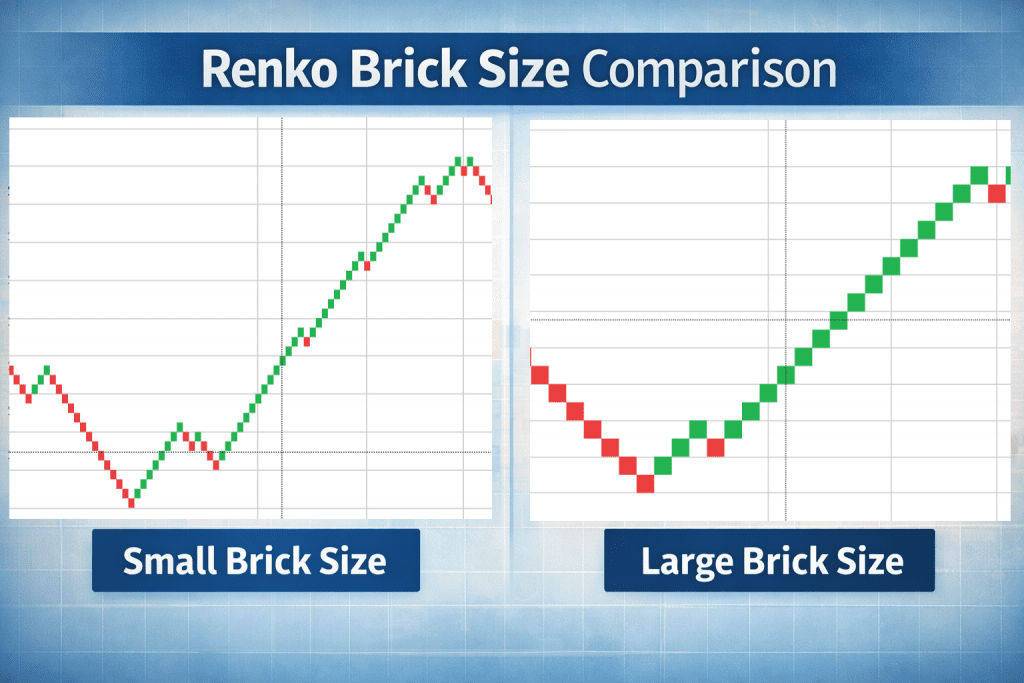
Brick size controls how sensitive your chart is. Smaller bricks usually create more signals (and more whipsaws). Larger bricks usually create fewer signals (and longer trends). If you only optimize one thing, optimize brick size first.
- ATR Brick Size (Proven Tips and Tricks)
- Video: Free Renko Brick Size Calculator
- Brick Size Backtesting in TradingView
- Wicks + Reversal Confirmation
- Brick Size for Gold (How To)
Entries and Timing
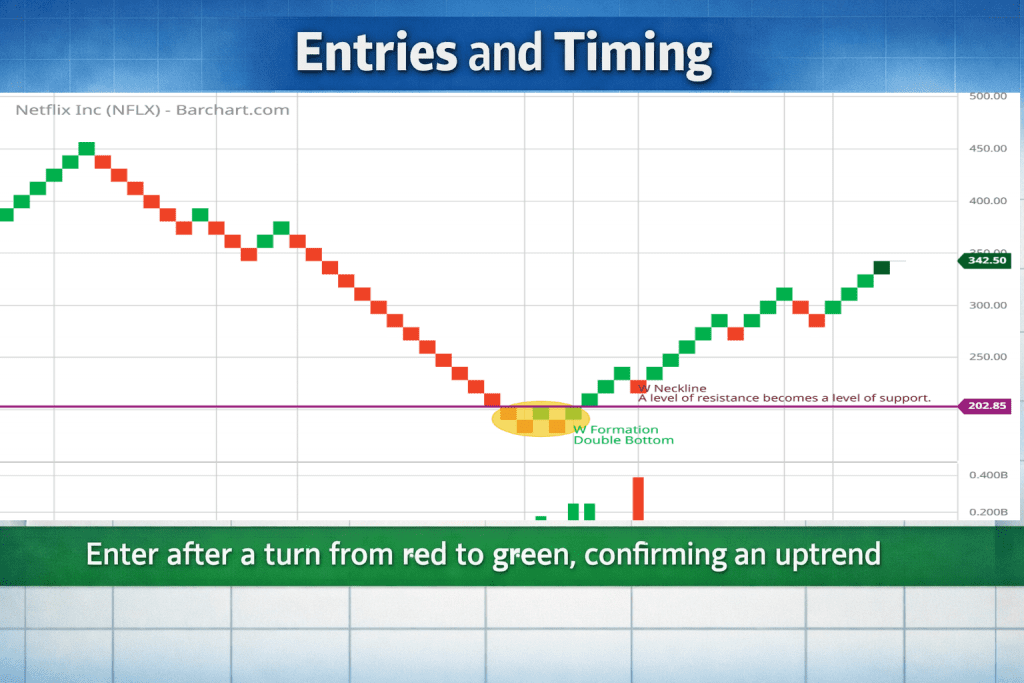
A good entry rule is not “early” or “late.” It’s consistent. In this Renko charts guide, I focus on entries you can actually test across markets and timeframes.
- Entry Timing: Early vs Confirmed Entries
- Renko Trend Trading Tips
- Renko Strategy for Beginners
- TradingView Labels for Smarter Breakout Entries (AAPL)
Stops, Exits, and Trade Management
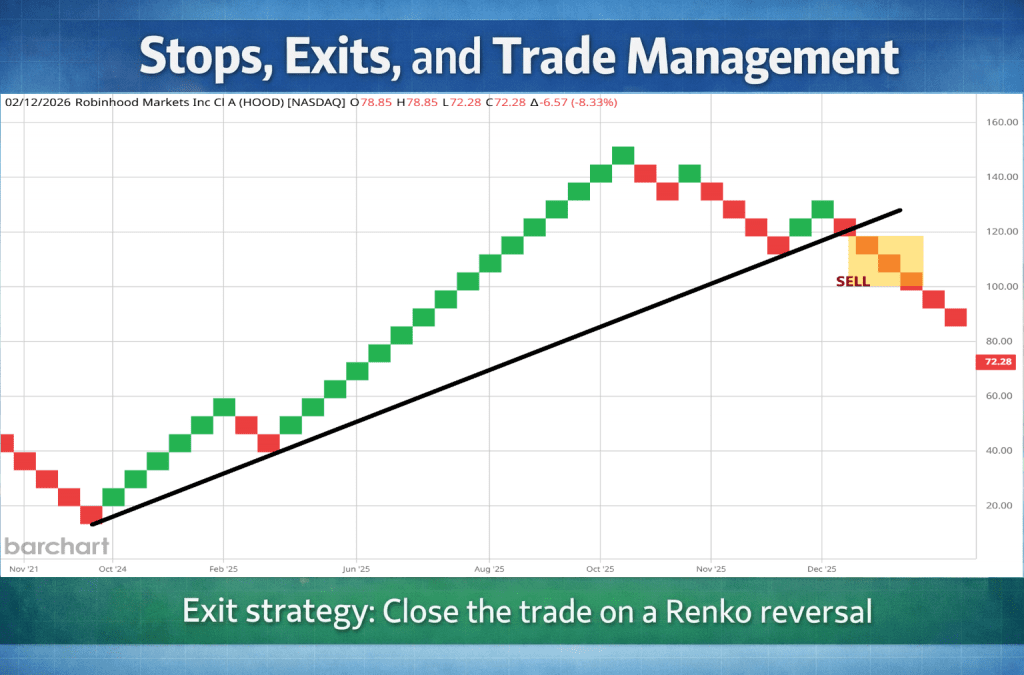
Exits are where performance is created or destroyed. The goal is not perfect exits, it’s exits that match your strategy type and keep you in trends while controlling downside.
- Renko Stop Loss and Take Profit (7 Exit Methods)
- Renko Chart Exit Rules
- 5 Renko Exit Rules Every Trader Should Know
- Renko Chart Buy/Sell Signals
Patterns and Indicators
Patterns and indicators can help if you treat them as testable rules, not predictions. If you add an indicator, test it with one clear job: filter entries, confirm trends, or trigger exits.
- 5 Powerful Renko Chart Patterns
- W Pattern Trading
- Dynamic Renko Indicators
- Moving Averages with Renko
- Renko + Supertrend Strategy
- Renko Support and Resistance
Backtesting and Strategy Development
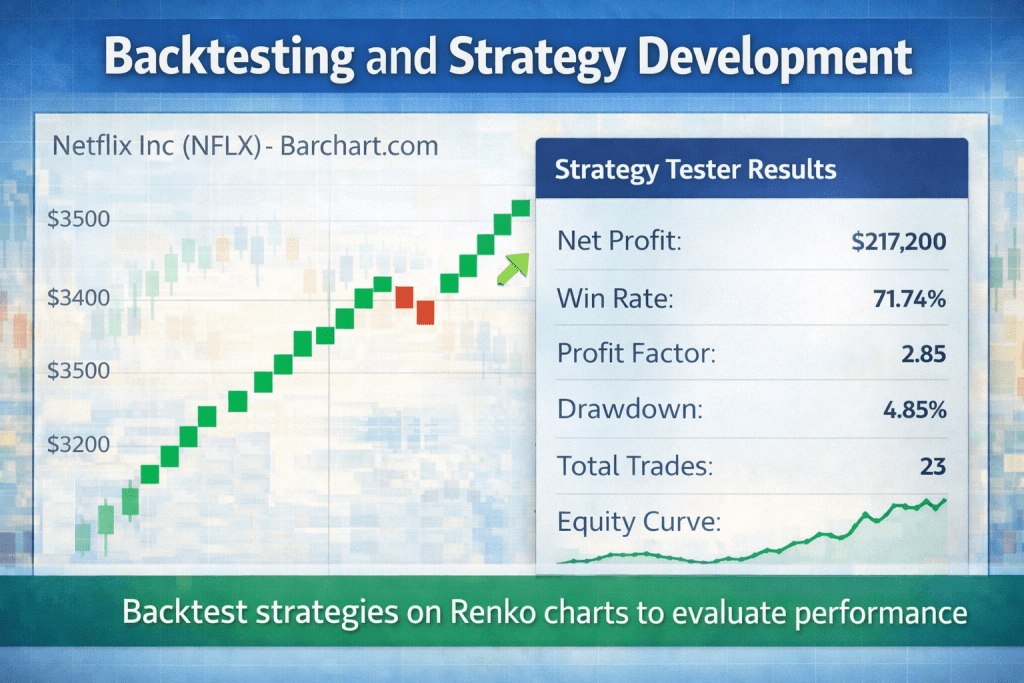
Backtesting turns opinions into evidence. Use these to build repeatable rules and compare results against buy-and-hold or a simple benchmark.
- Backtesting Renko Strategies (Tips and Techniques)
- Step-by-Step TradingView Strategy Development
- Renko Backtest: Daily vs 4H EURUSD
Trading Psychology
Renko helps reduce noise, but discipline still matters. The best strategy is the one you can follow during drawdowns, boredom, and fast moves.
- Video: Renko Psychology (Avoid Overtrading)
- 4 Trading Psychology Lessons
- Video: Technical Analysis Discipline
Covered Calls and Investing With Renko
If you blend chart structure with income strategies, this section is a good starting point. I like approaches that are simple, testable, and easy to manage.
- Covered Calls and Dividend ETFs
- How to Roll a Covered Call
- Dividend Stocks and Covered Call ETFs
- Simple Diversified Portfolio
FAQs
What’s the fastest way to start with Renko charts?
Start with Renko Chart Basics, then choose a brick size method, then test one simple entry rule and one simple exit rule consistently before adding complexity. That simple workflow is the core of this Renko charts guide.
Is ATR-based Renko always better than fixed-size Renko?
No. ATR adapts to volatility while fixed-size stays constant. The better choice depends on market behavior, timeframe, and your test results.
What’s the most common Renko mistake?
Changing settings mid-test or mid-trade. Keep brick size, confirmation rules, and exits consistent so your results mean something.
Watch the Video Versions
If you want the video walkthroughs and TradingView demos, visit: